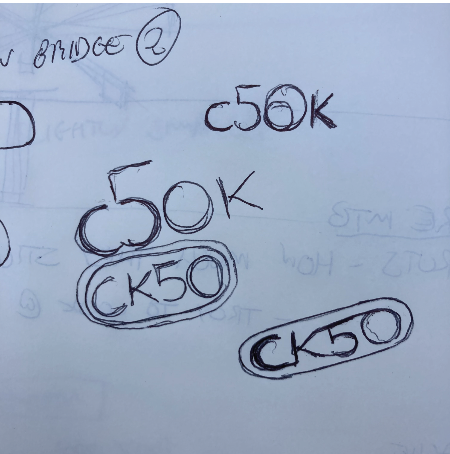
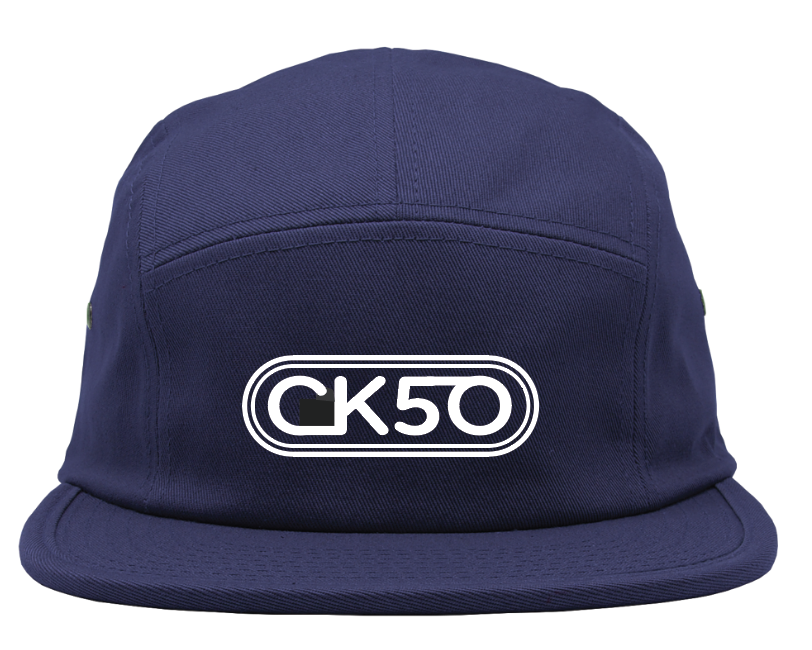
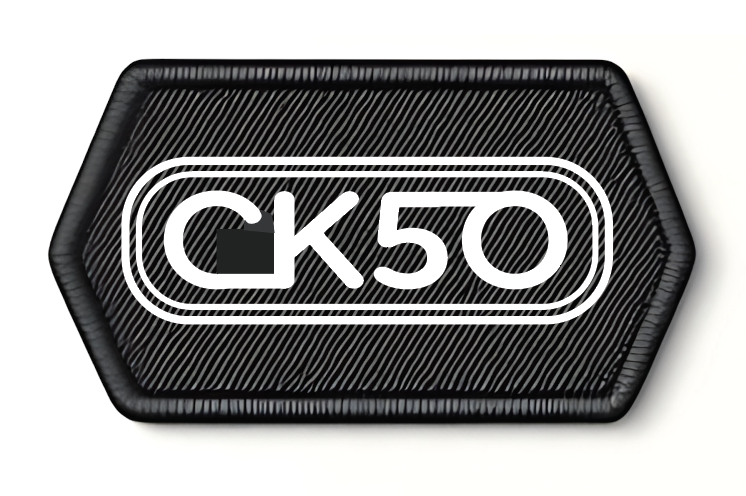
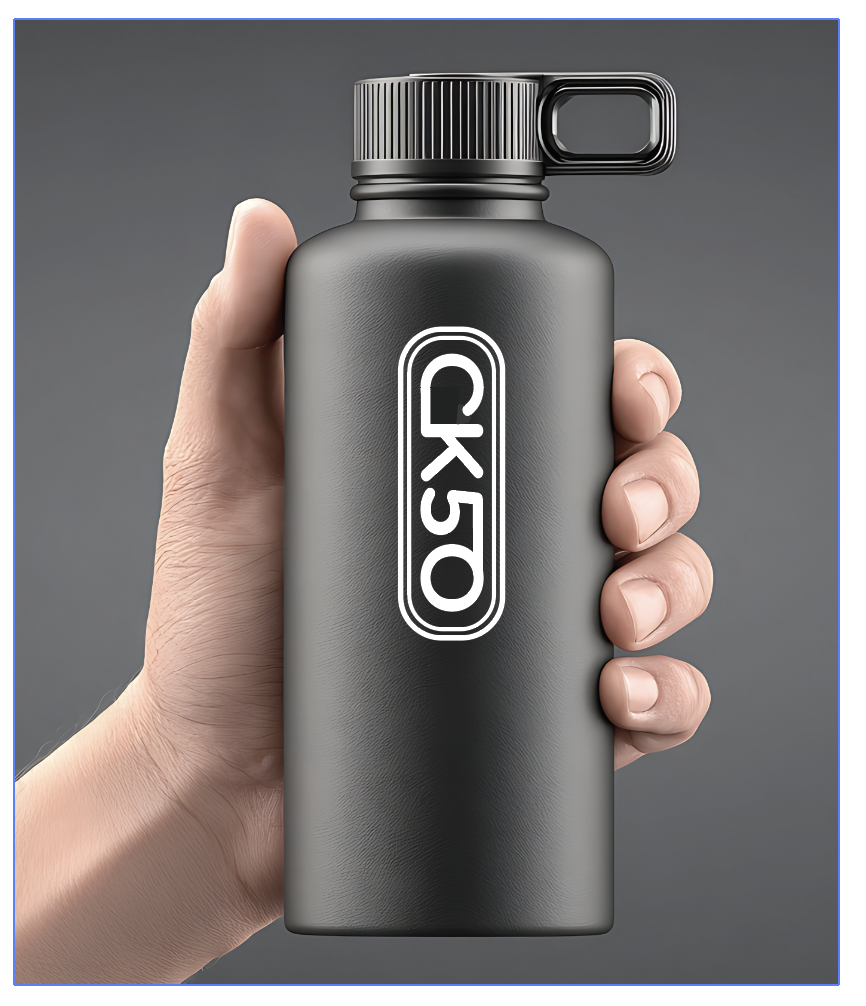
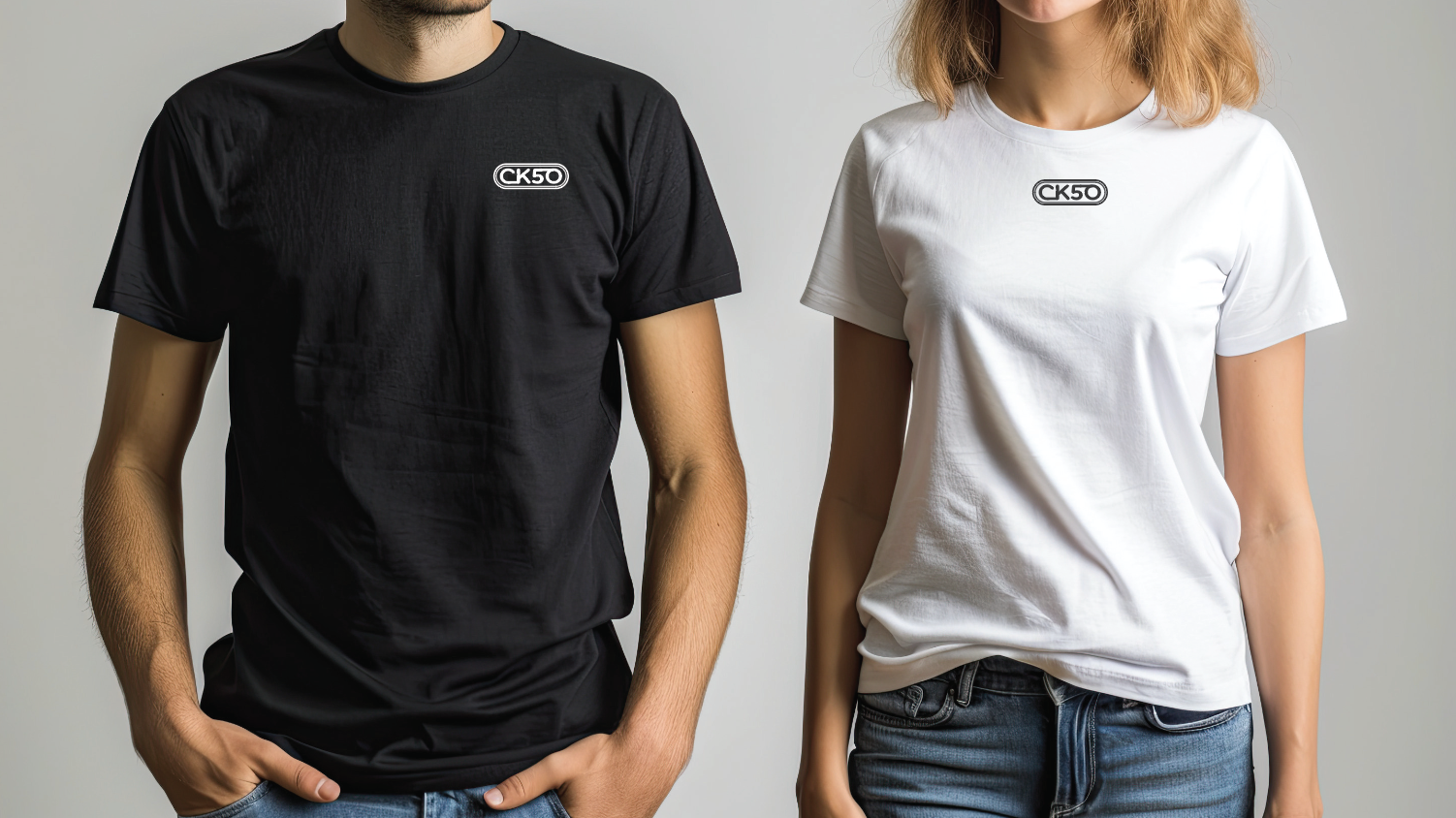
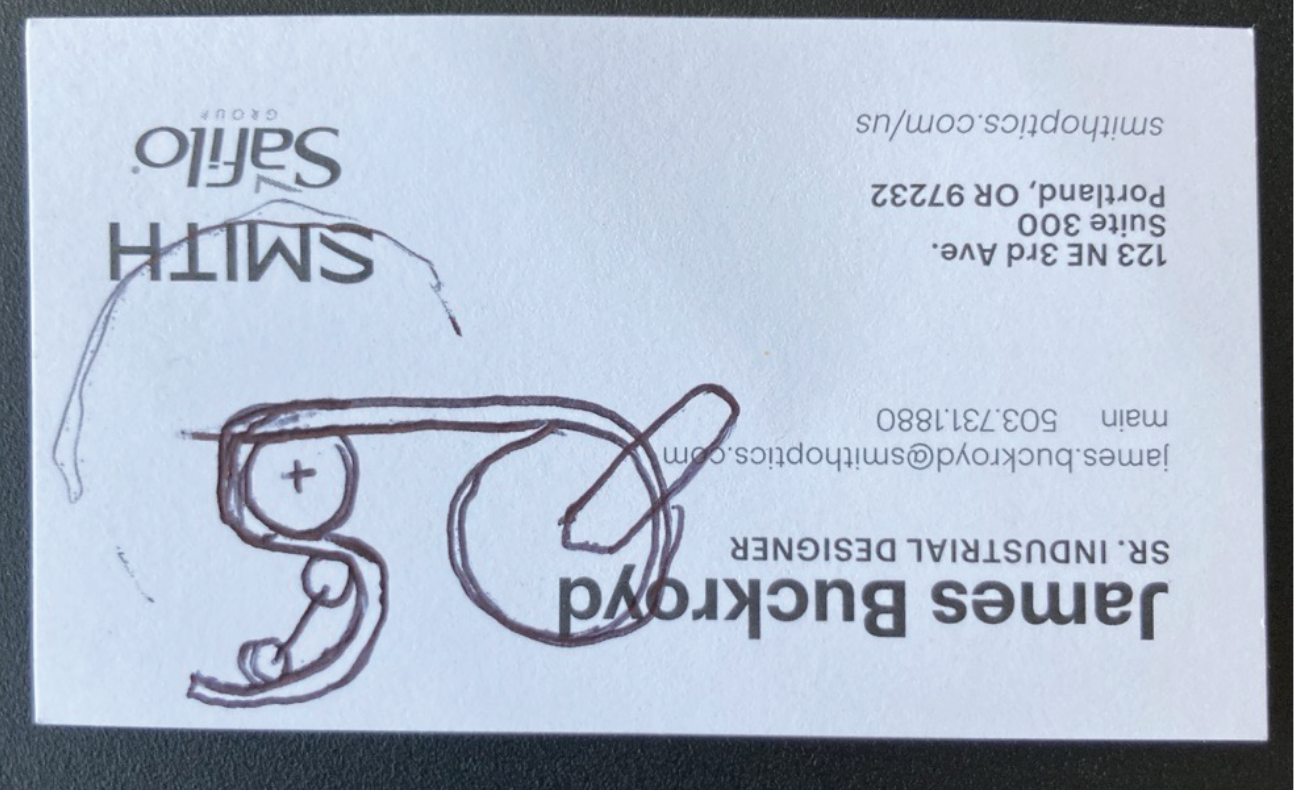
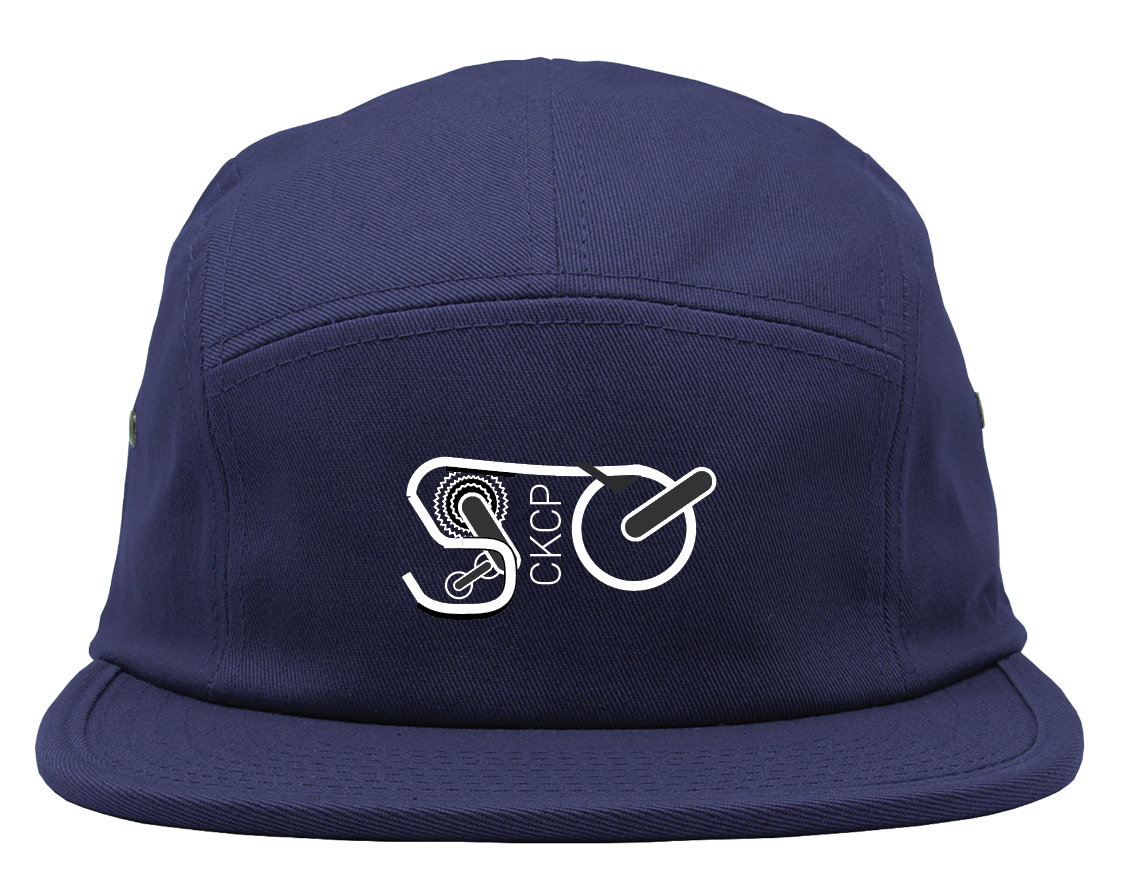
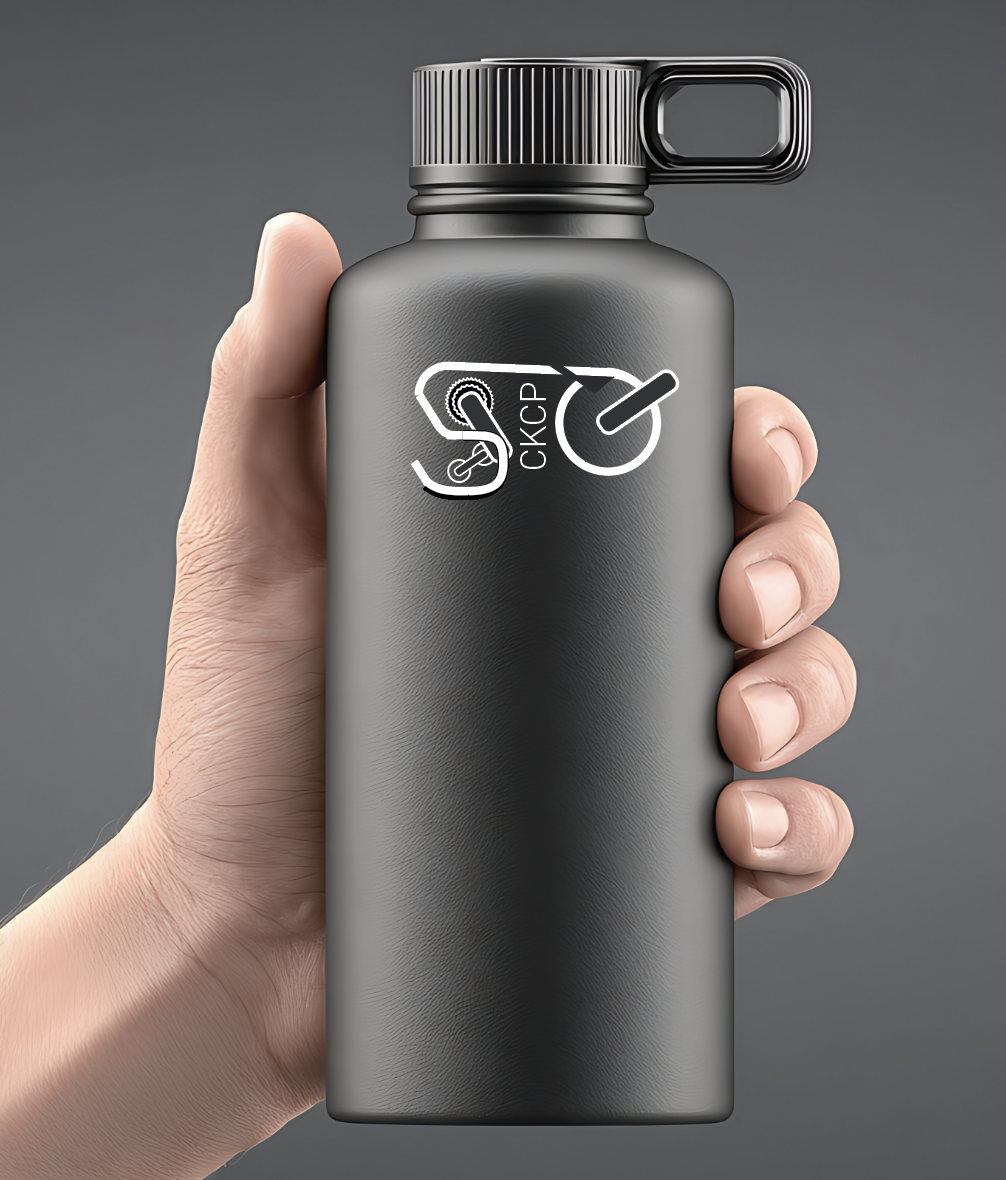
Follows are some rough “comps” for a few ideas I had for CK50. Maybe they are diamonds in the rough, but they will need to be cut and polished to shine.
Proposal 1
WHY? CKPC has been around, lets reference that. CK has simple engineering that you remember, and never go back on.
HOW?
Joining some retro vibes to portray years of operation, and a simple easy to remember roundy shape for stickiness with some clean lines that can be reproduced over several mediums
WHAT?
Proposal 2
WHY?:
CKPC has been around long enough that drive matters. King makes drivetrain parts hubs, and bb’s, it’s a part of a working system , a transmission! … but how can that translate in the eye?
HOW?
Bikes of course. chainwheels are round, wheels are circles, the chain snakes through the derailleur forming an S or a 5 ! the flow of the chain!
We have all been there, trying to find the right path while getting things done efficiently… wether that’s on cost and on time or targeted to the right consumer and best design, there are lots of things to consider, but we are inherently trying to keep moving… forward if possible! The notion of Balance allows us to “get things done efficiently” … when we are at an imbalance it can feel like we are struggling, crawling up hill and this can be disheartening. Now don’t get me wrong, creative conflict or imbalance can cause some amazing outputs, forcing us to think in different ways, but you cannot have that imbalance all the time.
Why?
Getting things done efficiently or “easy” as some people say, allows us to feel good about our jobs, it produces satisfaction, it allows us to feel needed and passionate to come into work the next day and do more really good stuff! and it also means we are more likely to hit time / cost constraints on projects for the whole company.
What goes wrong?
It’s important to understand that when working in a 20+ person company or corporation you are surrounded different “subject matter experts” from product mgrs , developers, engineers, designers and so on. Everyone works together to get to a common goal. Each of these disciplines see things at slightly different angles, this is great some diversity and expertise, BUT the opportunity for imbalance to sneak in.
Over my time consulting and working in various size companies I have found that balance or imbalance rears its head in many forms. The basics are always true, they involve teams and constraints set by the company.
Causes of Imbalance:
The voices in the team are imbalanced … maybe an engineering voice is always strong and loud and drowns everything else, or maybe a product managers voice is too quiet.
The goal is unclear. Causing people to have a slightly different path to getting things done.
The priorities of a project are not ranked or communicated.
The Scope (level of required effort or complexity) of the work is different in each team members mind
Some people have less humility than others.
Cures for Imbalance
Someone (normally a non team member) needs to curate the TEAM carefully understanding the goals and people involved.
Outwardly Admitting that we often don’t know the Scope is important, and being upfront and asking everyone to be flexible and communicative.
Every SME has the ability to be heard (this mens understanding personalities and communication styles), this takes some diligence to remember and enforce this.
One person in a working team makes the ultimate decision on a moving forward point. A decision is made, all the SME’s respect that and work towards it
The team members that need development work in EQ should be identified and mentored to provide a better level of humility.
I get this question fairly frequently…. Are you familiar with VBL’s or Design Language ? – Yes of course I say, I mean why wouldn’t I be familiar, but then I realize that less experienced designers don’t often know too much about this subject, and even more seasoned designers can overlook the the importance of it or even the relative sensitivity of clients or others.
In simple terms Design Language is the art of communicating without spoken words. It connect the aesthetic to the manufacturer/ brand , and controls objective values and subjective ideas. When done correctly it can make the consumer feel unequivocally like “this is the one for me”
Why?
Design Language is critically important for companies that already have existing products , a line of products already selling so to speak. On a visceral level consumers connect the “look” of a product with a particular brand. They then connect the brand with buying attributes, ie cheap, quality, hi tech, durable and so on. We have often heard a comment such as “that’s a great Honda”, later to find out it was a KIA but we were mistaken because a key element like headlight style had been copied from Honda and applied to a Kia model. That’s the power…applying Honda values (and mis use) of Design Language. Another classic example is a Apple with its clean minimal looks, consistent use of simple colors and finishes make an Apple product identifiable at a glance. We can all find copies of this look on amazon, where manufacturers are trying to ride on the tail coats of Apple’s quality and brand, yet providing technically inferior products at lower prices.
This is all current talk, identifying brands by existing Design Language, But as designers, the DNA / Language is important for the “future” design… how do you evolve the design without loosing what makes a BMW a BMW? I mention BMW because there was a bit of controversy recently on the styling of their new M3 where an element near the rear wheel was not deemed as “BMW” enough or even the controversy of the grille redesign of 2021.
In many ways, creating from scratch is the easiest and cleanest because you have no baggage to consider. You can start from a blank page, understand the value and create a pure design language that can then be applied. This however is rarely the case, as companies often have history. Evolution is not bad per se, but can be tricky as you have to proverbially “trre the elastoplast off” so to speak. This leads to the BMW type criticism, where you always are walking a tight balancing line of new and old. I have done both, worked with new identities and refreshed existing languages. Ultimately the choice is for the client on how far to leap.
How do we create a design language?
Creating a design language mainly falls on a Designer, but the best thought out works involve heavy input and collaboration from Product Managers, Category Managers and business leaders to influence the role of designer. Good designers naturally look for a starting place, and that normally starts with meaning and understanding the root or the Why cause. We know that design can express different sensed attributes like strong, delicate, intricate…etc so one challenge is what exactly do we want to express? This aspect of deciding on what is important and what is already conveyed is often the most difficult, as non designers often have a hard time linking sensed attributes to descriptive words. There is no hard and fast process, but the steps below allow you to understand and consider what is in a Design DNA / Language document and how to get there.
A look internally:
What values do we want to express?
What values are already established?
What aspects do we already communicate?
How does the current product or marketing express the values now?
Re establish the company and brand value
Where did our product come from?
A look externally:
Who do we compete with?
How do they win? or not
What role does trend play?
What role does technology play?
What do consumers expect?
What’s appropriate to the market?
What are the design and visual trends? What are the market / category factors shaping things?
A look at the consumer:
Who is our consumer / customer?
Where are they headed and what is pulling them there?
What are the design and visual trends affecting them?
What is influencing the consumer?
Creation
the crux! – Design time to synthesize and generate design elements
Documentation
Values & Vision
History
Statement of unique offering
Target / Persona
Design Principals
Design Elements
Materials, Texture, Color
Graphics
Inspiration
Examples
What makes a good design language?
Critically, what does make a good language? If you ask specific disciplines, the sales guy will say a Good Language drives sales. An engineer will say a good language is one that is easy to manufacture, you get my point here. Ultimately f we have had a langauage for 10years and we look back to the overarching pillars that made it successful, these will be them:
Longevity
The test of time is the ultimate measure. Often companies have good intention of updating the design language, say every 5 years. But we know in reality business pressures may slip this. That’s why in my experience a good design language has to have legs and thinking built in for longevity. It needs to last more than a year!
Appropriateness
If all goes well and a designer / team do their jobs then the language produced should be spot on and appropriate to market, category, industry and consumer set. To the insider this may look / feel a little risky as teams are often very sensitive to change. But remember that, externally it would be considered moderately progressive. Which means it will be attractive, appealing and stand the test of time, back to point 1.
Thoroughness
This is stating the obvious 🙂 , but as an outsider or new person you may not realize what you need or the depth needed. This comes with working with a professional that has insight and experience. They have the ability to provide a deep level of thoroughness and depth, which in the long-term will make product and brand creation easier and cause less confusion.
I hope you found this article useful, if you need any help with Design languages or any questions please drop them in the comments box below or drop me a mail at jbucky1@gmail.com
Experience can certainly make you well rounded and good designer, but is that all? and does it? After a few hours of pondering on the subject, I scribbled this though provoking diagram regarding factors that might make you a great designer.
Let me expain….
On the Horizontal axis is the spectrum of… DOING to THINKING On the vertical axis … VISION to PRAGMATISM
We encounter these in the act of designing, in different quantities and at different times during the process. Some areas you may not know, some you may be better at than others.
Let’s personify this and think about the human roles….. A Scuplter has grand vision for the statement of their art, it doesn’t have to be pragmatic at all. Then in practice a Sculptor is hands on to create, craft, form, mold etc and make the sculpture. It needs both of those skills to create a vision.
A Machinist must be hands on in their craft to machine excellent quality metal parts, but they must also be down to earth / pragmatic and super considerate of real world constraints. Standards for threads have existed for years and bucking those systems may cause
An Event Planner must be able to create and understand a strategy (and a vision?) to execute on the real world details for an event. Understanding the goal and the plan to get to a real world execution of an event, they have to be pragmatic and deal with the existing realities and last minute change
Steve Jobs!, its hard to put a practical job title on Steve Jobs, but he had great vision meshed with the long term strategy thats still being executed today 10’s of years later in Apple products.
Back to a great well rounded designer. Do all these aspects have to exist?, do you have to have a little of every persona?
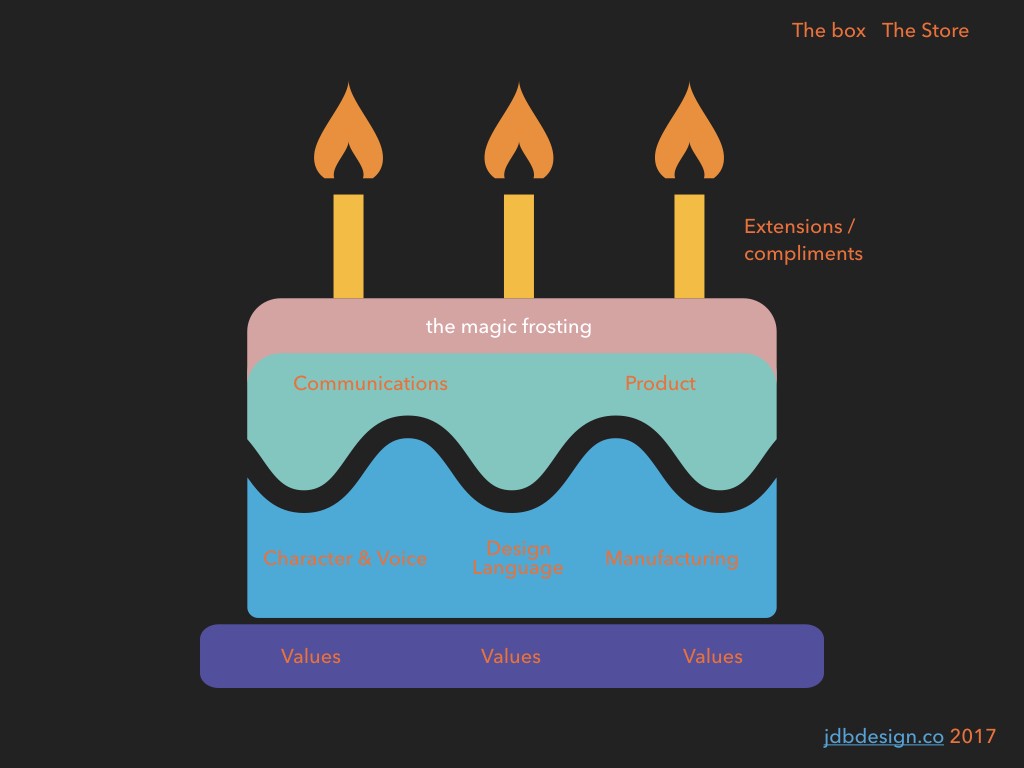
A post I made back in late 2017 talked figuratively about a cake. The cake being what the consumer tastes in their experience with a company. How the layers of cake shine through in the taste or maybe not. Fast forward 6 years and how has this changed?
To think about this, I align with the ends of the spectrum, startups and really big companies that have billions in revenue.
Start-ups often get know in a consumers mind for a single layer of the cake, in hardware world that tends to be the product layer – INNOVATION, in apparel world that can be the marketing layer due to fashion influences that set on trend or boom the BRAND.
The issue with startups is they can only rely on one layer of the cake for a short period of time. In order to keep going and grow they have to build the rest of the cake to keep some market advantage or even just keep the cash coming into keep the doors open. That’s if they realize it.
Do start up’s fail because they don’t realize to build the rest of the layers?
Equally I have seen many small startups focus too much on the communications layer first and don’t backup with the product promise. Often giving the consumer a hollow taste. We are all aware of some of these companies from the instagram adverts, they have nice graphics, a smooth website, reat social media…. but when you get the product / garment / software it leaves some to be desired.
Then onto big companies, established companies with millions in revenues have oven already built the cake. Over time the layers of the cake might have gotten thinner or thicker and changed the flavor (overall experience). If we compare the consumer base of a small company with a large one, the large ones have established consumers with repeat buyers. A sutle layer change that affects the overall experience can tip thousands of existing consumers. the cake is sensitive!
We just chose to drive 1800miles. I reckon in the US it’s not a lot, in the western europe it’s considered a bit mental. Luckily for us, our new car gets 44miles per gallon, (11.6 miles per litre). And that’s with multiple mountain passes, so not all flat and not electric car – pretty good – thank you Rudolf Diesel
We drove down to Yosemite Nation Park, it’s in California across from San Francisco.
On our way back up North, not as in Grim Up North, but as in travelling north back to Portland we also stopped at Mount Shasta, which is very close to the Oregon Border near the Interstate #5. We took our ski’s with us so we could do some ski also.
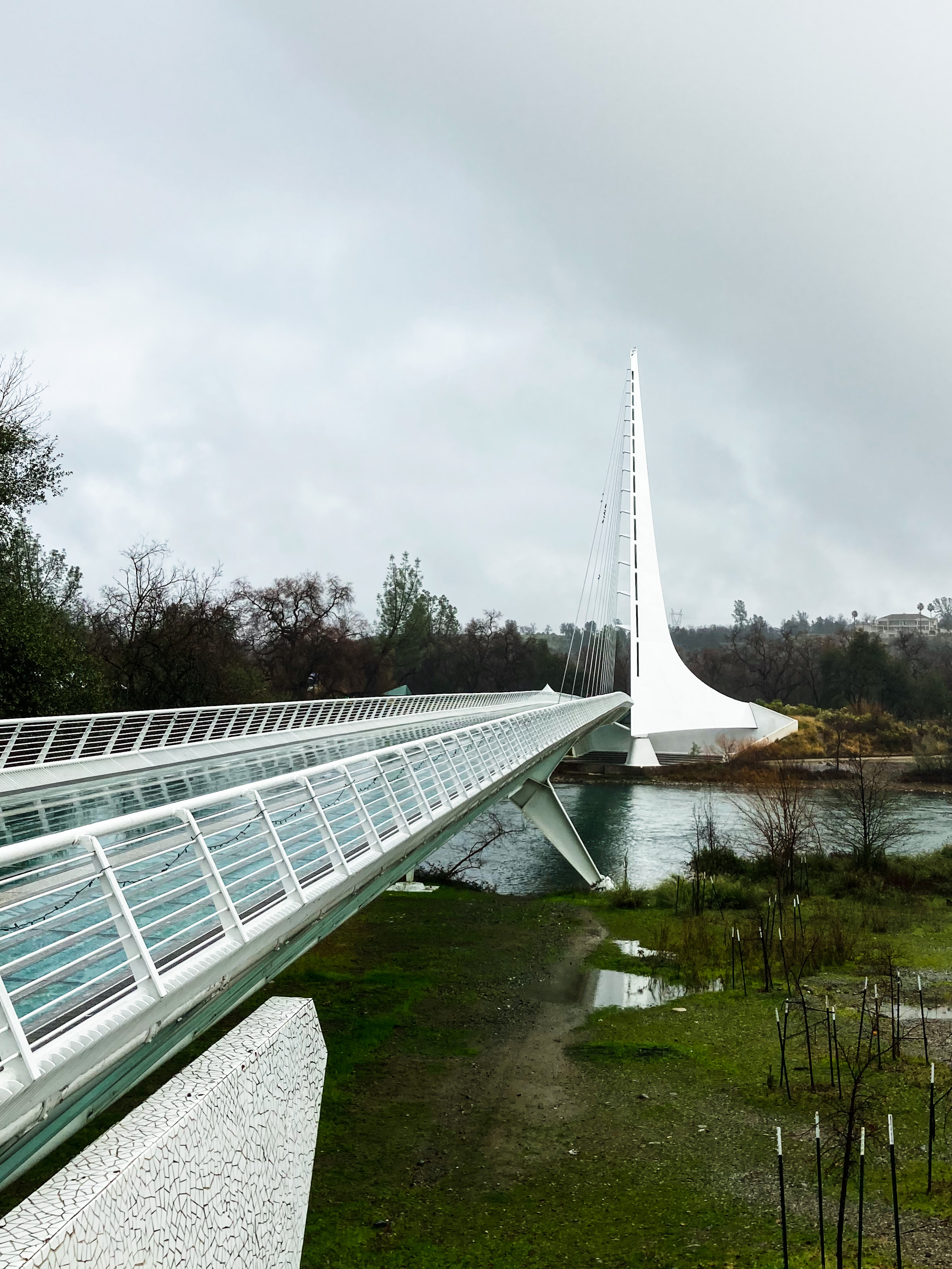
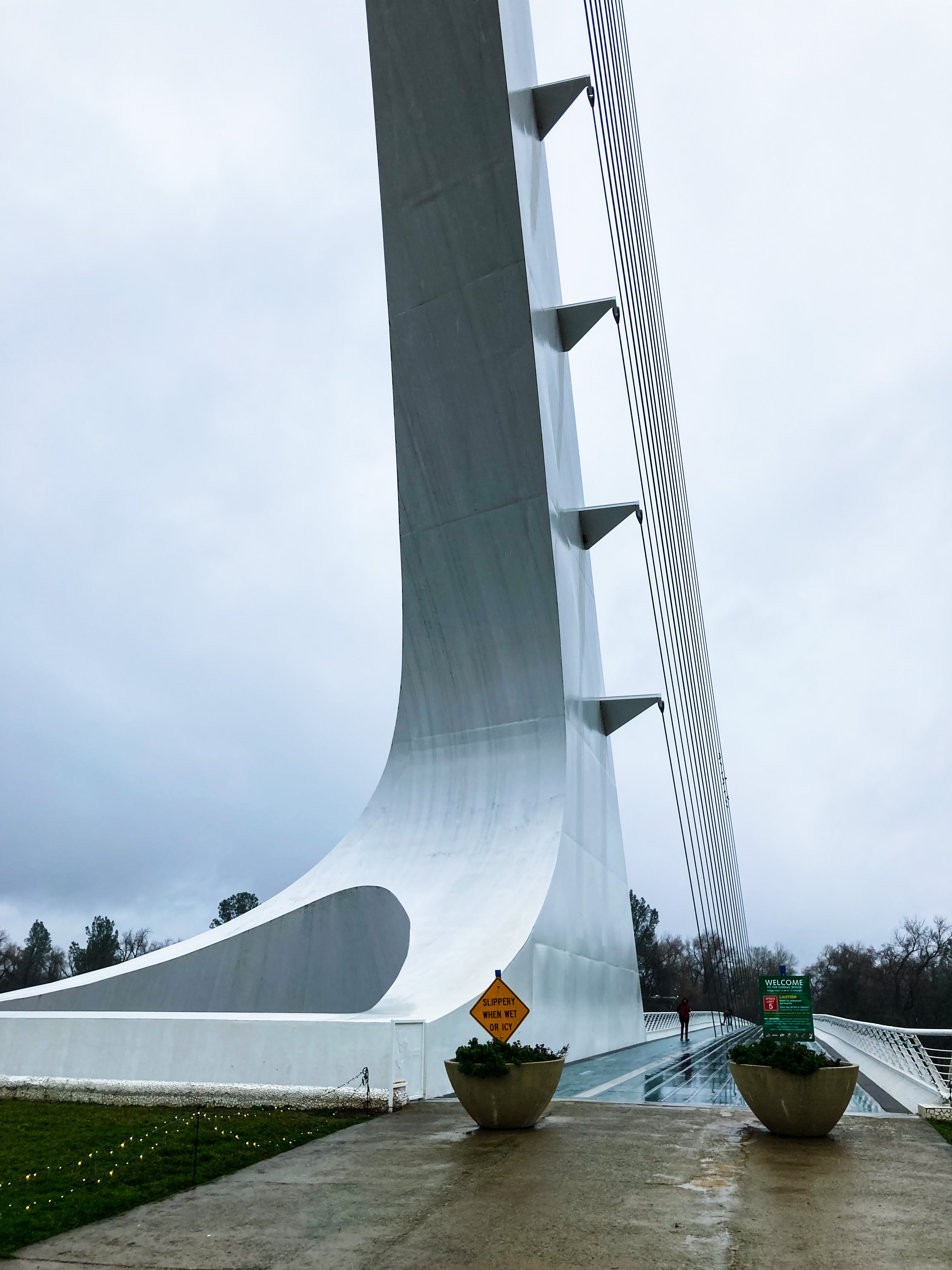
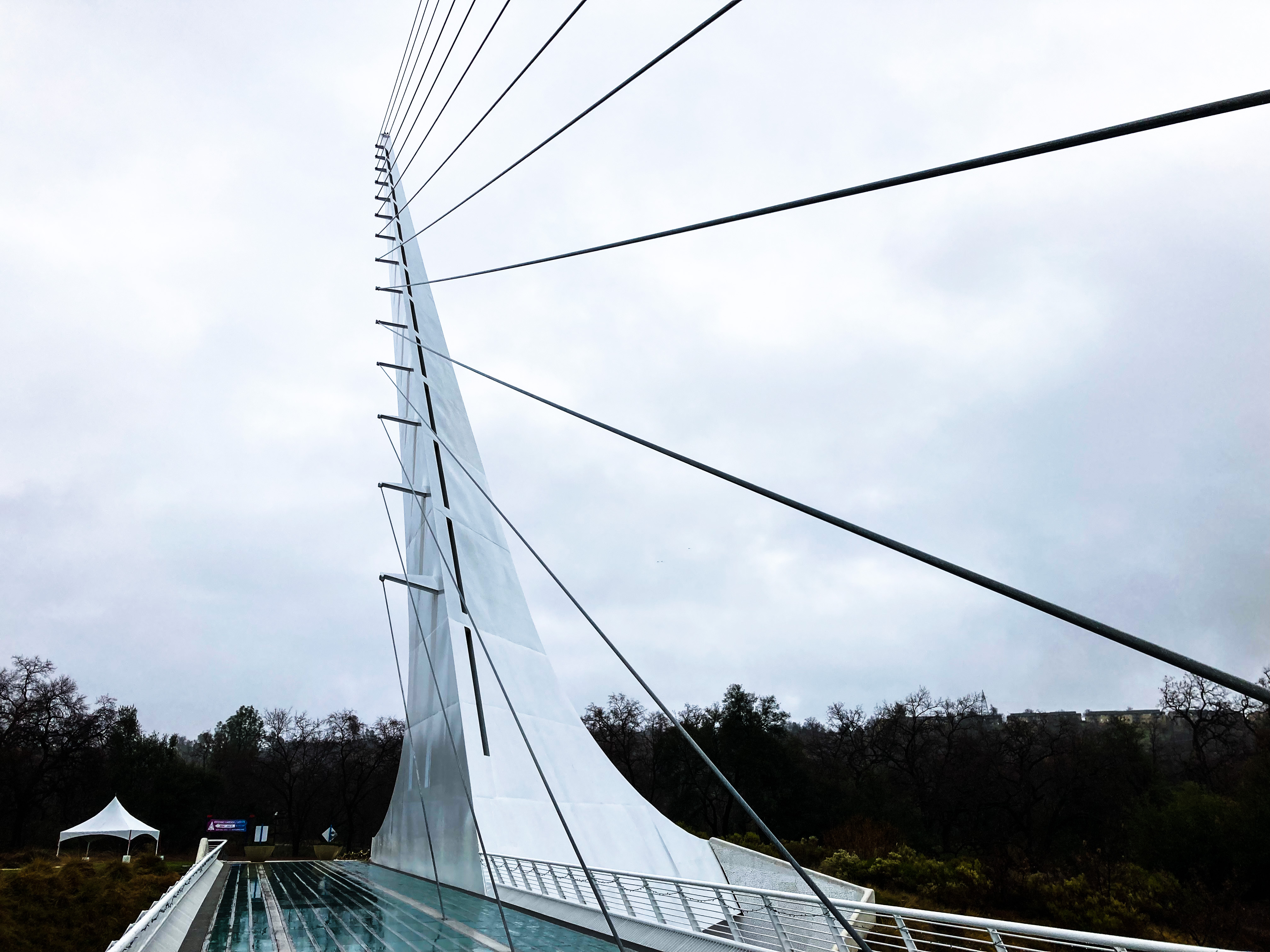
Going down there, after 6hrs of driving we spent the night in Redding California a little farmer town, but has a big name architect bridge. The Sundial Bridge (cantilever spar cable 2004 glass walkway) by Santiago Calatrava. Photos were off my iphone.
here’s a few things.
Small Northern California towns are strange, creepy, awkward, nutty, peculiar… you choose.
Yosmite national park is huge and super awesome.
Mount Shasta is great too. But not as super as Yosemite
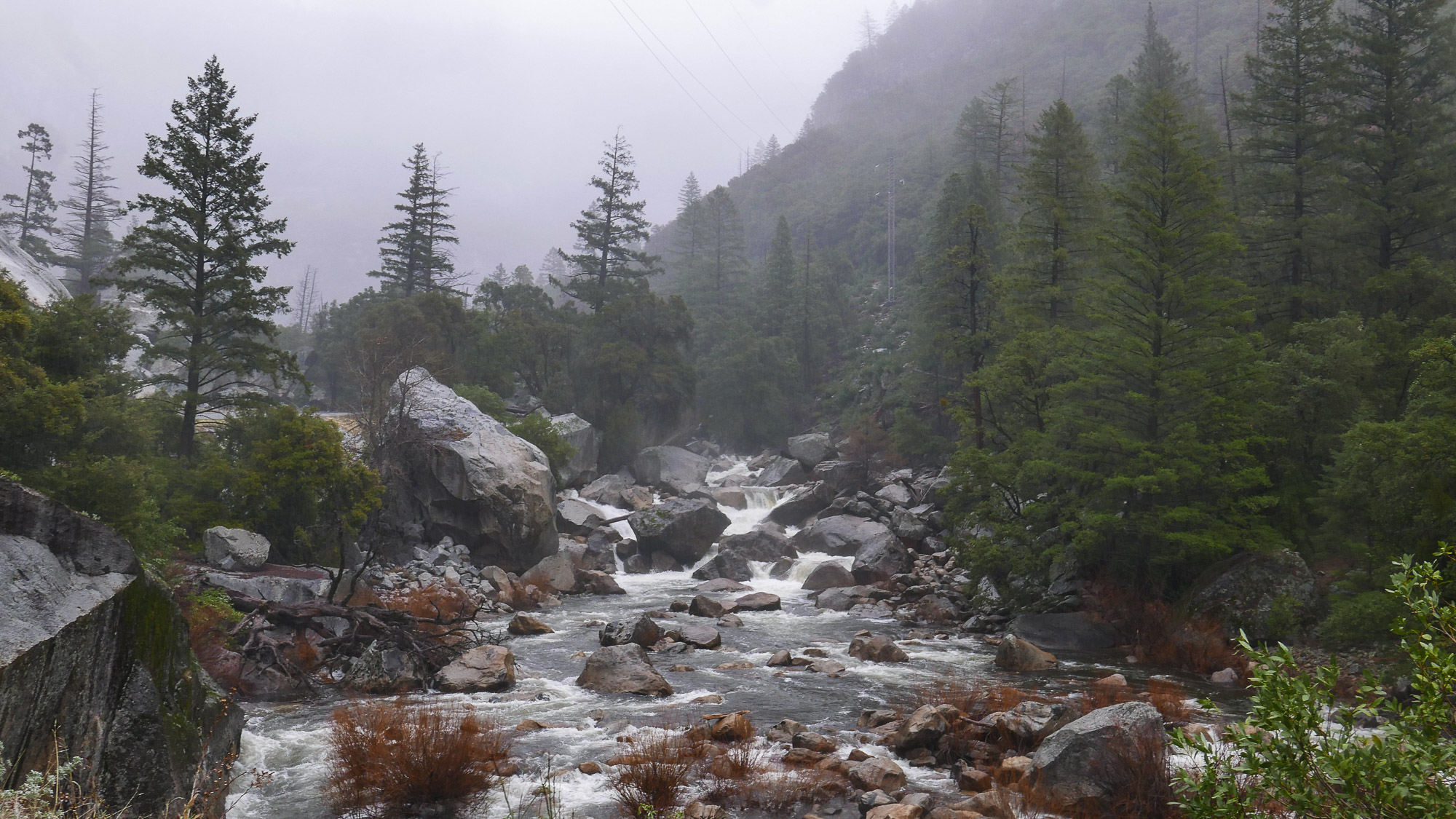
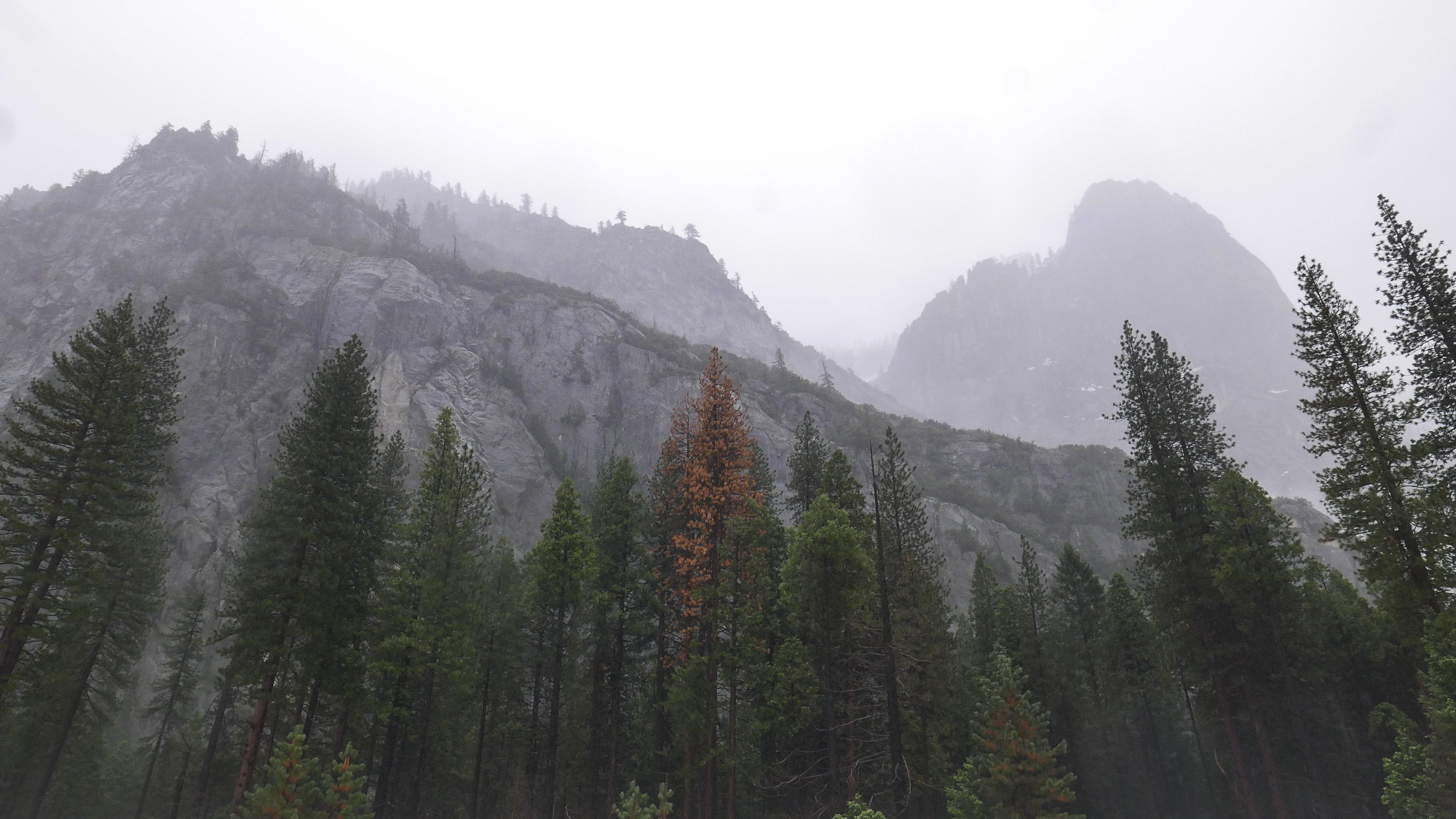
Yosemite was a bit of a wash out for us. We went there at a time of freak rainstorm, so the experience was not the best to do outdoor things or take pictures. But we still enjoyed it.. We stayed in accommodation / cabin things in the boundaries of the national park (sorry I didn’t take photos) which I like a lot because its very 70’s vibe. That 70’s craft vibe where stuff was made well and made to last. This was all designed in a unique national parks way. Which you either love or hate.
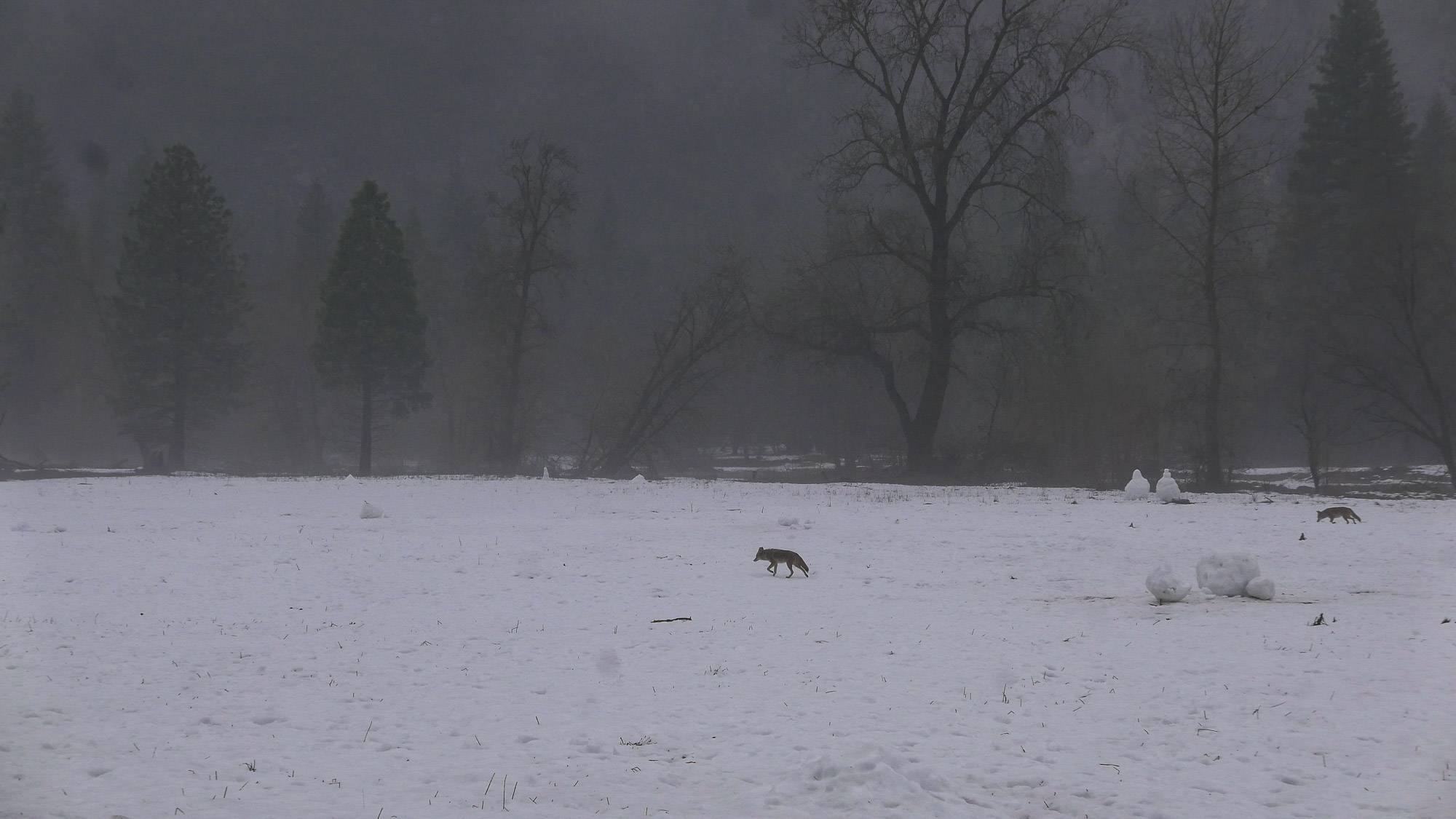
We saw a lot of cool rocks in Yosemite valley and also heard a pack / band of coyotes howling and I got a photo of two of em.
Yosemite National Park is twice as big as London, which pales into insignificance with Yellowstone. With two famous climbing rocks in the climbing world- El Capitan (3000ft vertical granite face) and Half Dome, if you haven’t heard of Alex Honnold, you should google him because he’s a proper nutter and has the time record on climbing up El Capitan without ropes.
Just before coming back into Oregon, we Cross Country skied at Mount Shasta, it was nice but it’s not as good as Oregon views. It felt a lot less busy than Mount Hood, Oregon, which is nice. Coz theres a lot of flip flop kirkland water-bottle buggers getting up Mount Hood.
I’ll wait a while until I can afford something better,
my grandma always said there was more reward in saving up for something you really wanted
oh this thing, yeah had it a long time, has a cool natural worn look, the Japanese call it Wabi Sabi
I took the bus, the EV still needs someone to make that electricity, its not like it’s free!
Im trying to visit 100 waterfalls this year
you guys really have disposable cutlery?
America’s streets are worn out, there was gold, but everyone took it. The gold was keeping the moisture in the surface of the earth, now it’s drying out
Having recently attended a few materials shows and a bigger outdoor industry event, it’s really encouraging to see more emphasis put on sustainability. It’s always been somewhat there, but now the manufacturers are responding with more options and better offerings on recycled materials.
Even though recycled materials are a small step, it’s a good step. a few years back there was no where near the options we have now for designers to select fabric options.
One of the big players to be pushing a lot of information is Invista (Cordura Brand), they have a growing range of recycled Nylon and Polyester – called re/Cor – good digital resource for creative is their online material selector. https://invistapsm.my.site.com/
It’s also great to here things like this from Gore
In an ongoing journey to sustainability, the consumer business of Gore’s Fabric Division brings to market 2-layer Gore-Tex laminates with Bionic textile made from plastic waste collected from coastal environments. Gore’s collaboration with Bionic, established in 2020, supports a mission of reducing ocean plastic through community engagement by investing in plastic recovery and sorting in a facility in Cóbano, Costa Rica. Sorted plastic waste is turned into materials used in the textile component of the two new laminates.
“The new Gore-Tex laminates with recycled Bionic textile are a testament to how we can use meaningful scientific innovation to seek bold solutions for some of the most complex problems facing our industry,” said Achim Loeffler, consumer fabrics business leader at Gore. “Our collaboration with Bionic and Patagonia will enable us to turn garbage into good.”
The Patagonia products, slated for F/W ‘23, are constructed with Gore’s new ePE membrane and 100 percent recycled Bionic polyester textile made from 50 percent plastic waste collected from Bionic’s operations in coastal communities and 50 percent from municipal collection. Product is Global Recycled Standard (GRS) certified.
Together with the Cóbano community, Gore and Bionic have collaborated to set up local waste management systems to repurpose plastic waste; recycling stations along roads and beaches; organized community beach cleanup events and community outreach; and centralized sorting, bailing and flaking facility and collection routes for local businesses, schools and other institutions.
I don’t really write a lot about design, but I do find this subject and this book fascinating. I hope to be able to find it soon. Read the article here:
This sounds like a proper riveting read doesn’t it ? – As you probably know, I think its better to repair than replace for multiple reasons, but my two main reasons are Design and Sustainability. The fans in the units are pretty nice, lower noise and decent performance combined with good looks so why mess with that combo?
















 JDB Design
Leave a comment